
Cold Compress for Wisdom Tooth Pain: Timing and Safe Use
Find out where to place a cold pack, how to space sessions, when warmth may help after wisdom tooth removal, and which symptoms need prompt dental care.
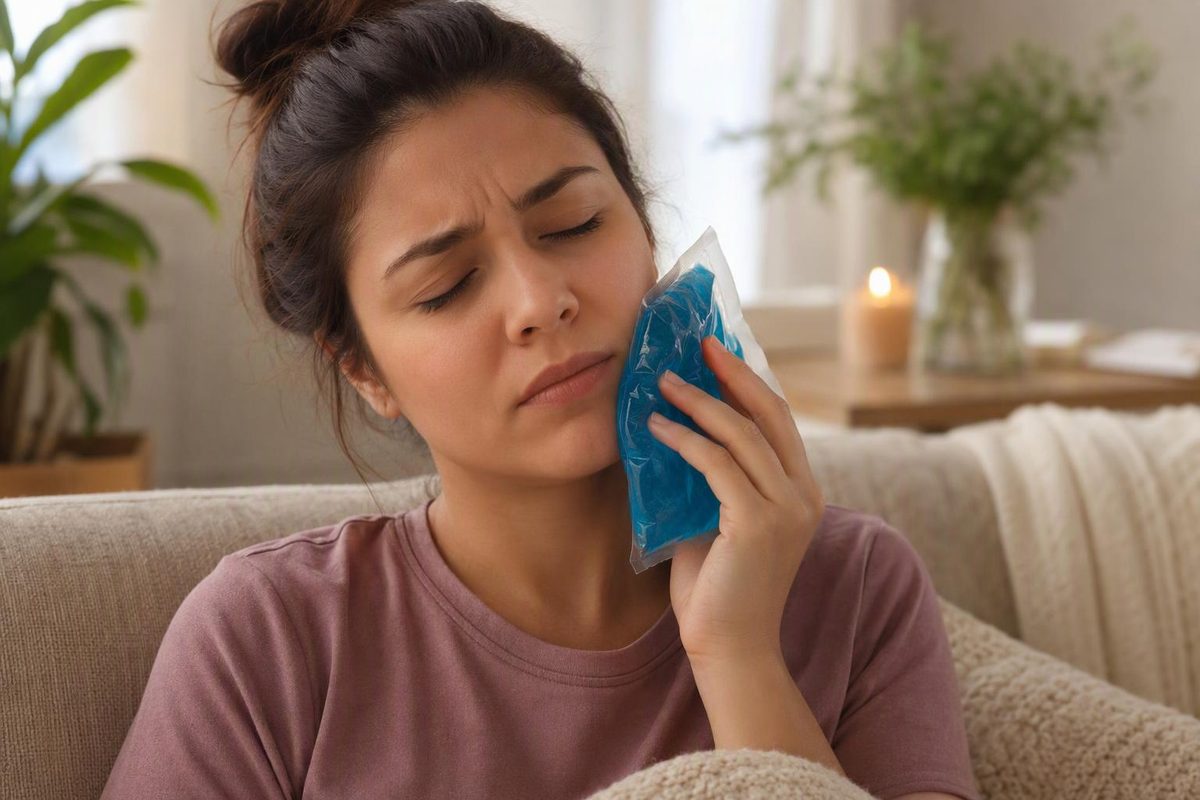
A cold compress on the outside of your cheek may ease wisdom tooth pain and reduce swelling, but it does not treat the cause of a toothache. Use a towel-wrapped cold pack or bag of frozen peas, as suggested by NHS dental self-care guidance. After wisdom tooth removal, follow your surgeon’s instructions first; cold packs are an addition to your recovery plan, not a replacement for prescribed pain medicine or dental assessment.
Choose whether your tooth has been removed and any warning symptoms; the tool shows the next step.
Cold Pack or Dental Care
Toothache warning signs include pain not helped by painkillers, fever, bad taste, red gums, or cheek/jaw swelling. Emergency signs also include difficulty speaking from swelling.
Intermittent Cold May Help
Hold a towel-wrapped pack against the outside of your cheek. One postoperative schedule is 20 minutes on, then at least 20 minutes off, while awake.
Your surgeon’s schedule takes priority. Stop if the pack hurts or irritates your skin; cold does not replace your pain-medicine plan.
Sources: AAOMS recovery guidance; Oral Surgery of Scarsdale postoperative instructions; NHS toothache and dental self-care guidance; Mayo Clinic dry socket guidance.
Place the Cold Pack Against Your Cheek, Not the Socket
Wrap the pack in a clean cloth or thin towel before placing it against your face. Do not put ice directly against your skin. Hold the wrapped pack gently against the outside of the cheek over the sore or swollen area.
The application site is your cheek—not the tooth, gum, or extraction socket. This distinction matters after surgery: the cold pack is an external comfort measure, not something to place in the wound. A bag of frozen peas is an alternative to a cold pack, but it still needs a cloth barrier.
One practical postoperative schedule is 20 minutes on, followed by at least 20 minutes off. Oral Surgery of Scarsdale’s wisdom tooth removal instructions use this interval and specify a cloth between the pack and the skin. That is one practice’s postoperative schedule, not a universal rule for every patient or every toothache.
Use a timer so the end of a session does not depend on remembering when you started. Remove the pack when the timer ends, leave your cheek uncovered for the break, and repeat intermittently while awake if that matches your surgeon’s plan. You do not need to keep your cheek continuously cold.
Do not leave the pack strapped to your face while you sleep. If applying it hurts or irritates your skin, stop rather than trying to complete the timed session. Relief is the purpose; discomfort from the pack is not a reason to press harder or continue longer.
If your surgeon gave you a different on/off interval, use that instead. The available guidance does not establish one ideal number of daily sessions for everyone. There is no need to turn the example schedule into an all-day target or compensate for missed sessions by leaving a pack on longer.
Cold Is Mainly for the First 48–72 Hours After Removal
The American Association of Oral and Maxillofacial Surgeons recommends intermittent ice packs during the first 48–72 hours after wisdom tooth extraction to help reduce swelling and skin discoloration. Its guidance says moist heat may help after 72 hours if the jaw remains sore. See AAOMS recovery guidance.
These are postoperative time windows. They do not establish a cold-to-heat schedule for someone whose wisdom tooth is still in place, or for someone with unexplained facial swelling.
| Situation | Compress Guidance | Main Limitation |
|---|---|---|
| First 48 hours after removal | Intermittent cold | Follow your surgeon’s schedule |
| 48–72 hours after removal | Within AAOMS’s early cold window | Instructions can differ |
| After 72 hours | Moist heat may help a sore jaw | Not for worsening swelling |
| Tooth still in place | External cold may offer relief | Dental cause remains untreated |
The point of this timing is not that everyone must switch packs at an exact hour. Instructions differ on when to stop cold or introduce warmth, so the plan from the clinician who performed your extraction takes priority. If that plan is unclear, ask the surgical office rather than combining incompatible schedules from different websites.
Pain and swelling are common during the first few days after removal, but they should gradually improve. Whether symptoms are settling or worsening matters more than simply reaching a particular day on the calendar. A later recovery day does not make new severe pain or increasing swelling suitable for treatment with a different compress.
Keep taking pain medicine as directed in your recovery plan. If cold offers some comfort, it can be used alongside that plan; feeling temporarily better does not mean you should disregard the medication instructions. For how compress use fits into the broader recovery sequence, see our wisdom teeth recovery timeline.
Warmth Is for Later Jaw Soreness, Not Unexplained Swelling
AAOMS’s advice about moist heat after 72 hours concerns a jaw that is still sore after extraction. It is not a general recommendation to heat any painful cheek once three days have passed.
Separate postoperative soreness or stiffness from swelling that is new, worsening, or accompanied by other warning symptoms. In the latter situation, the next step is assessment, not an automatic change from cold to warmth. Your surgeon can clarify whether the symptoms fit the recovery they expect and whether warmth belongs in your plan.
If your wisdom tooth has not been removed and your face is swollen from a toothache, do not apply heat. NHS dental self-care guidance warns that heat can make this swelling worse. The postoperative advice about later moist heat does not override that warning.
The cited guidance does not give a universal temperature or session length for moist heat. Do not borrow the 20-minute cold-pack schedule and assume it is also the right heat schedule. Use your surgeon’s specific directions if they recommend warmth.
A Cold Compress Cannot Resolve Pain From a Tooth Still in Place
When the wisdom tooth is still present, external cooling may provide relief while you arrange dental care. It cannot resolve an infection or another underlying dental problem. Repeated icing is therefore not a substitute for finding out why the tooth hurts.
The NHS advises seeing a dentist for toothache that lasts more than two days, does not respond to painkillers, or occurs with fever, a bad taste, red gums, or cheek or jaw swelling. These are reasons to seek dental assessment even if the pack briefly makes the area feel more comfortable.
The two-day threshold is not an instruction to wait when other warning symptoms are already present. Pain with swelling or fever has its own reason for assessment. Likewise, pain that does not respond to painkillers should not be managed simply by extending cold-pack sessions.
A useful distinction is between easing a symptom and changing its cause. A compress may make the cheek feel better while the dental problem remains. Judge whether to seek care by the symptoms and their course, not only by how the area feels immediately after cooling.
If you are waiting for a dental appointment, describe the duration of the pain, whether painkillers help, and whether you have swelling, fever, red gums, or a bad taste. Those details explain why you need assessment more clearly than saying only that you have been using ice.
New or Worsening Postoperative Pain Needs a Call
Contact your dentist or surgeon right away for new or worsening pain in the days after extraction. This is especially relevant if the pain is severe, spreads toward the ear, or comes with a foul taste or odor.
These can be dry socket symptoms. A cold pack does not establish whether you have dry socket, and cooling the cheek does not replace its dental treatment. Mayo Clinic advises contacting your dentist or surgeon right away for new or worsening postoperative pain.
Do not let the early-recovery cold window become a reason to delay that call. Being within the first 48–72 hours tells you when intermittent cold may be used; it does not mean every symptom during that window should be managed at home.
When you contact the surgical office, explain that the pain is new or getting worse, rather than reporting only that you still need a compress. Include whether it travels toward the ear or comes with an unpleasant taste or odor. Those features are relevant to the postoperative concern described in the guidance.
A pack that no longer provides enough comfort is not a reason to keep it on continuously. If pain cannot be managed with your prescribed recovery plan, seek urgent dental care rather than improvising a longer cooling schedule.
Swelling and Bleeding Can Change the Next Step
Seek urgent dental care for significant or worsening swelling, swelling with fever, pain you cannot manage with your prescribed recovery plan, or bleeding you cannot control. A compress should not become the main response to these problems.
Seek emergency care immediately if mouth or neck swelling makes breathing, swallowing, or speaking difficult, or if the area around your eye or your neck is swollen. These thresholds are supported by NHS dental emergency guidance and NHS toothache guidance.
The distinction is the action needed, not how long you have been icing. Breathing or swallowing difficulty is not something to watch through another on/off cycle. Eye-area or neck swelling also moves the situation beyond choosing between a cold pack and warmth.
| Symptom Pattern | Next Step |
|---|---|
| New or worsening pain after extraction | Contact your dentist or surgeon right away |
| Significant swelling, fever with swelling, unmanageable pain, or uncontrolled bleeding | Seek urgent dental care |
| Breathing, swallowing, or speaking difficulty from swelling; eye-area or neck swelling | Seek emergency care immediately |
These categories are not a way to diagnose the cause yourself. They help identify when symptom relief is no longer the main task. If more than one applies, act on the more urgent category.
Use Your Recovery Instructions to Set the Schedule
For uncomplicated early recovery, the practical approach is a wrapped pack against the cheek, timed sessions with breaks, and the pain-medicine plan your surgeon provided. Do not place the pack inside your mouth, use bare ice on your skin, or leave it on while asleep.
Before switching to warmth, check both the elapsed time and what you are treating. Later jaw soreness may fit the AAOMS advice; unexplained or worsening facial swelling does not. If you do not know when the extraction occurred or what your surgeon recommended, clarify the plan rather than treating the timing table as a personalized instruction.
For a tooth that is still in place, use cold only as temporary comfort while addressing the dental cause. For postoperative symptoms that worsen, or for swelling with warning signs, arranging the appropriate care takes priority over another compress session.