
Why Do People Remove Wisdom Teeth? Reasons for Extraction
Wisdom teeth may need removal for infection, decay or damage—not simply because they exist. Learn what can justify extraction and what to ask your dentist.
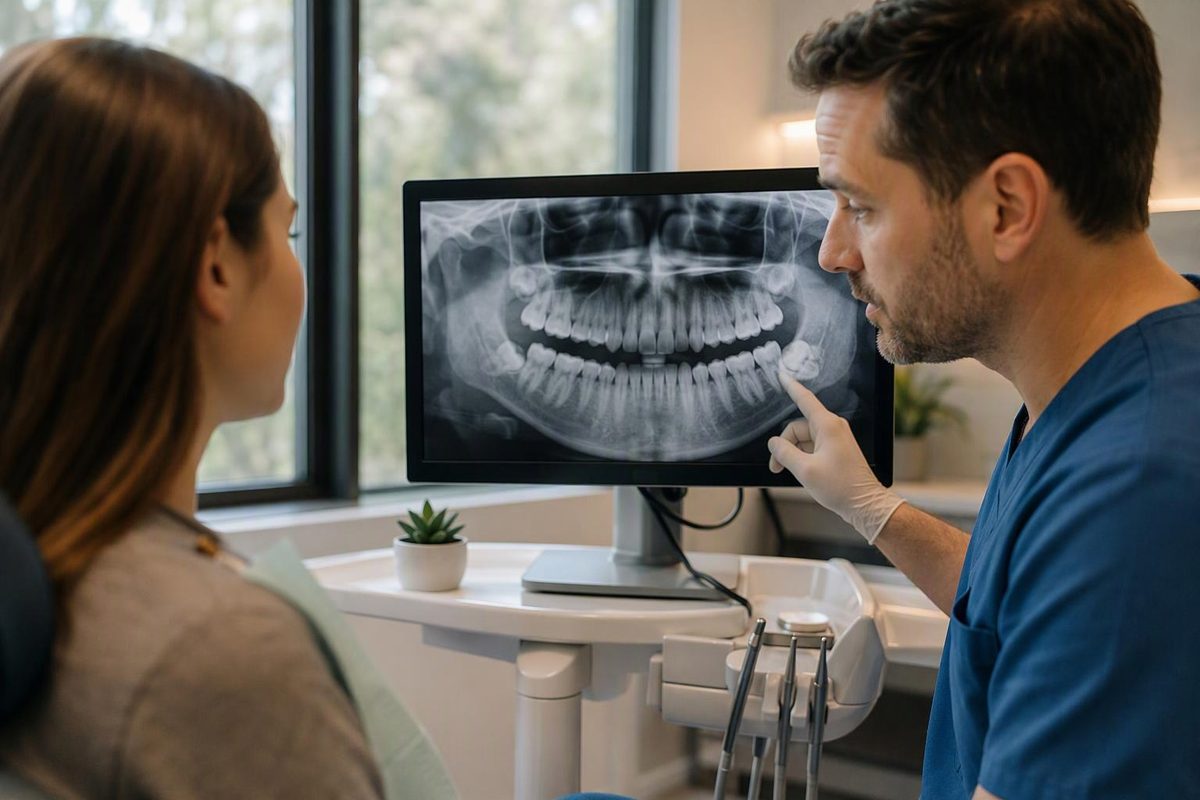
People remove wisdom teeth mainly to treat infection, tooth decay, gum disease or damage to nearby teeth. Sometimes a dentist recommends removal before symptoms start because the tooth appears likely to develop problems. But not everyone needs their wisdom teeth removed: healthy, fully erupted teeth that bite properly and can be cleaned daily may stay. Mayo Clinic explains these reasons for removal and retention.
The useful question is not just “Do I have wisdom teeth?” It is “What problem is this particular tooth causing—or likely to cause?”
Why wisdom teeth can become a problem
Wisdom teeth are the third molars at the back of the mouth. If there is not enough room, a tooth may become impacted, meaning it is blocked from coming through normally, or it may emerge only partly. A partially erupted tooth can be difficult to clean, allowing food and bacteria to collect around it. These situations can lead to pain, infection, decay or gum disease. NHS guidance describes these problems.
Common reasons to recommend extraction include:
- Repeated gum infection. Infection around a partly erupted wisdom tooth is called pericoronitis. Recurrent episodes can be a reason to remove the tooth.
- Decay that cannot be repaired. A cavity does not automatically require extraction, but removal may be appropriate when a wisdom tooth cannot be restored.
- A cyst or other disease around the tooth. These findings need assessment and may require surgical treatment.
These are recognized indications in Mayo Clinic’s patient guidance and NICE’s recommendations for impacted wisdom teeth.
Damage to the neighboring molar is another reason. Problems associated with impacted wisdom teeth include decay, loss of gum and bone support, and damage to the roots of the tooth directly in front. These are possible complications, not inevitable outcomes for every impacted tooth. Cochrane describes these conditions.
A first episode of pericoronitis does not necessarily mean surgery is needed. NICE’s published NHS guidance says a first episode, unless particularly severe, should not itself be an indication for extraction; repeated episodes can be. Pain also needs a diagnosis rather than an assumption that the wisdom tooth is responsible. NICE recommendations; AAOMS assessment guidance.
Why remove a wisdom tooth if it does not hurt?
No pain is not the same as no disease. An examination and appropriate imaging can reveal decay, gum problems, a cyst or damage that has not caused noticeable symptoms. The dentist also checks the tooth’s position and its relationship to the neighboring molar, nerves and sinus. AAOMS describes this evaluation.
When a tooth truly has no symptoms or disease, preventive removal is a less settled decision:
- AAOMS, the US oral-surgery association, recommends surgical management for teeth with disease or a high risk of developing it. Without disease or significant risk, it recommends clinical and radiographic surveillance. AAOMS position statement.
- NICE’s NHS guidance, published in 2000, advises against preventive removal of pathology-free impacted wisdom teeth. NICE lists this guidance as being updated. NICE recommendations; guidance status.
A 2020 Cochrane review found insufficient evidence to determine whether symptom-free, disease-free impacted wisdom teeth should routinely be removed or retained. It included only two studies, with low- to very-low-certainty evidence. The decision therefore needs an individual discussion about risks, monitoring and your preferences—not an automatic answer. Cochrane review.
Younger adults may also be advised to consider removal because surgery can become more difficult with age. Age helps inform timing, but it does not establish that every young person needs extraction. Mayo Clinic.
Is removal necessary to prevent crooked teeth?
Do not assume wisdom teeth must come out simply to stop the front teeth becoming crowded. The orthodontic study included in the Cochrane review did not show a clinically significant benefit from removal for changes in the dental arch, although the evidence was limited. A tooth blocking another tooth’s eruption is a separate issue that may justify treatment. Cochrane review; AAOMS guidance.
What to ask before agreeing to removal
Ask your dentist or oral surgeon to explain the reason for removing each tooth, showing you the examination or X-ray finding. Is there disease now, or is this a preventive recommendation? If preventive, what makes your risk significant, and could monitoring be reasonable instead?
Also ask how the risks of extraction apply to your anatomy. Removal can cause dry socket, infection or nerve injury with numbness or tingling. NHS guidance on complications.
For the alternative, including how to plan follow-up, see what happens if you don’t remove wisdom teeth.
Seek urgent dental assessment for severe or worsening pain and swelling, or pain with fever, a bad taste or feeling unwell. Difficulty breathing or swallowing with dental swelling needs emergency medical care. NHS wisdom-tooth guidance; NHS dental-abscess guidance.