
What Does Impacted Wisdom Teeth Mean?
Impacted wisdom teeth are blocked from coming through normally. Learn what partial and full impaction mean, when removal is considered and when to seek help.
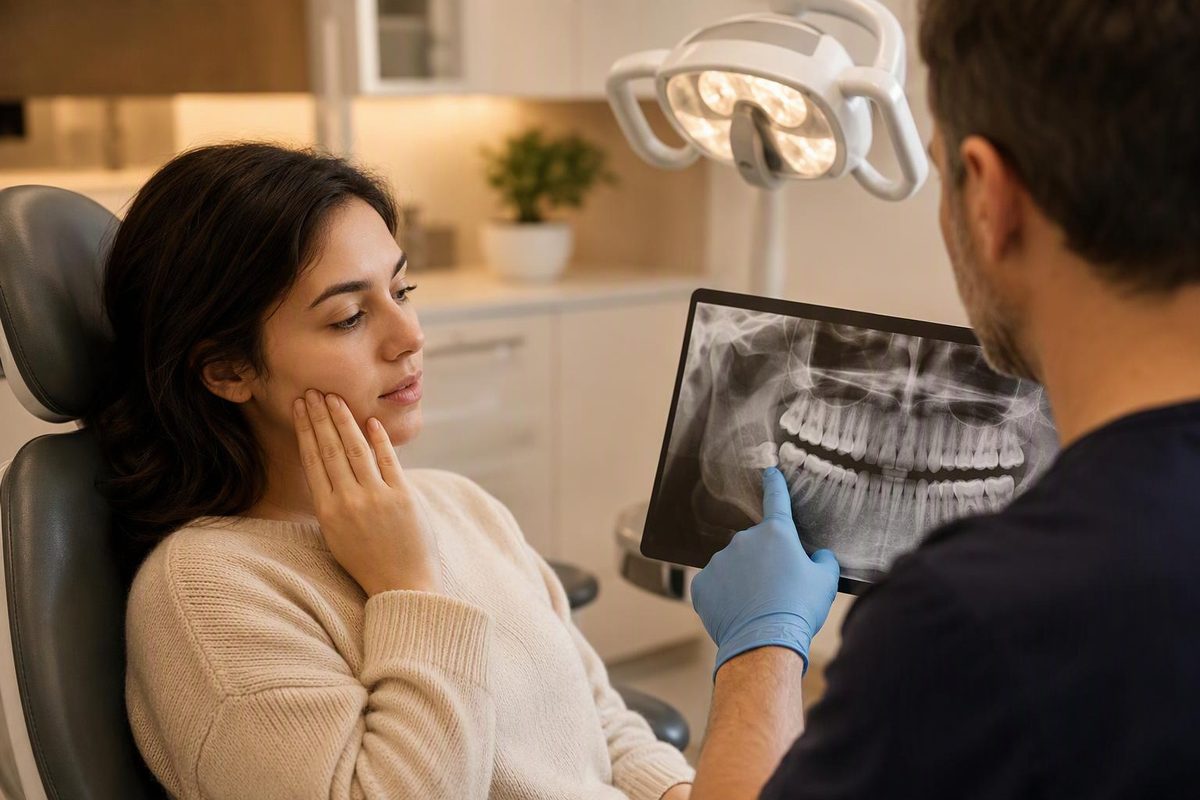
An impacted wisdom tooth is a back molar that cannot come through into its normal position because it is blocked or does not have enough room. It may be partly visible above the gum or completely hidden beneath the gum and sometimes within the jawbone. Wisdom teeth are also called third molars. Mayo Clinic
“Impacted” describes the tooth’s position—not necessarily an infection, pain or an automatic need for surgery. The next step is to find out whether the tooth is healthy, damaging anything nearby or likely to cause problems.
Partially impacted versus fully impacted
- Partially impacted: Some of the tooth’s crown—the top portion—is visible, but the tooth has not come through fully.
- Fully impacted: The tooth has not broken through the gum at all.
Either type can lean toward the next molar, point toward the back of the mouth or lie sideways. A tooth can also be upright but still trapped in the jawbone. So an impacted wisdom tooth is not always a sideways tooth. Mayo Clinic’s explanation of impaction
If you cannot see a wisdom tooth, that alone does not prove it is impacted. A dentist can use an examination and X-rays to check whether it is present and how it is positioned. Our guide to whether everyone has wisdom teeth explains the difference between missing teeth and teeth that have not emerged.
Can an impacted tooth cause problems without hurting?
Yes. Some impacted teeth cause no noticeable symptoms, but no pain does not necessarily mean no disease. A dental examination and X-rays can check the tooth and look for damage to surrounding teeth or bone. Mayo Clinic’s diagnosis and treatment guidance
Partially emerged teeth can be difficult to clean. Food and bacteria may collect beneath the gum, increasing the risk of decay or inflammation around the tooth, called pericoronitis. Other possible problems include damage to the neighboring molar and a fluid-filled cyst around an impacted tooth. These are possibilities, not inevitable outcomes. Mayo Clinic
When symptoms occur, they may include sore or swollen gums behind the last molar, jaw pain, swelling, an unpleasant taste, bad breath or difficulty opening the mouth. These symptoms need a dental check rather than a diagnosis based on appearance alone. Mayo Clinic’s symptom guidance
Does “impacted” mean it must be removed?
Not automatically. Removal is commonly considered for teeth causing pain, infection, damage or decay that cannot be repaired. Before deciding, your dentist should examine your mouth and review an X-ray with you. American Dental Association
For impacted teeth without symptoms, dental specialists differ: some recommend preventive removal, while others recommend monitoring when no disease is found. Your dentist or oral surgeon should explain the findings and weigh the risks of keeping the tooth against the risks of surgery. Monitoring means continued dental checkups, not ignoring the tooth until it hurts. Mayo Clinic
At your appointment, ask:
- Is there disease or damage now, or is removal being suggested to prevent a future problem?
- What does the X-ray show about the tooth and nearby structures?
- If we monitor it, what follow-up do I need?
- If we remove it, what are the specific surgical risks?
Removal may involve opening the gum and taking away bone that blocks access to the tooth. Anesthesia options and aftercare should be discussed before the procedure; “impacted” alone does not tell you which anesthesia you will need. Mayo Clinic’s treatment guidance
When to seek help
Arrange a dental appointment for pain, swollen gums or other symptoms behind your last molar. Seek urgent dental care for fever or facial or jaw swelling with dental symptoms, or if you suspect an infection.
Seek emergency care immediately if you have trouble breathing, speaking or swallowing, or a large amount of swelling inside your mouth. These may be signs of a dental abscess or spreading infection—not simply a tooth being impacted. NHS dental abscess guidance