
What Are the Last Teeth to Grow? Usually Wisdom Teeth
Wisdom teeth are usually the last adult teeth to come in. Learn typical ages, why some never appear, and when pain or swelling needs a dental check.
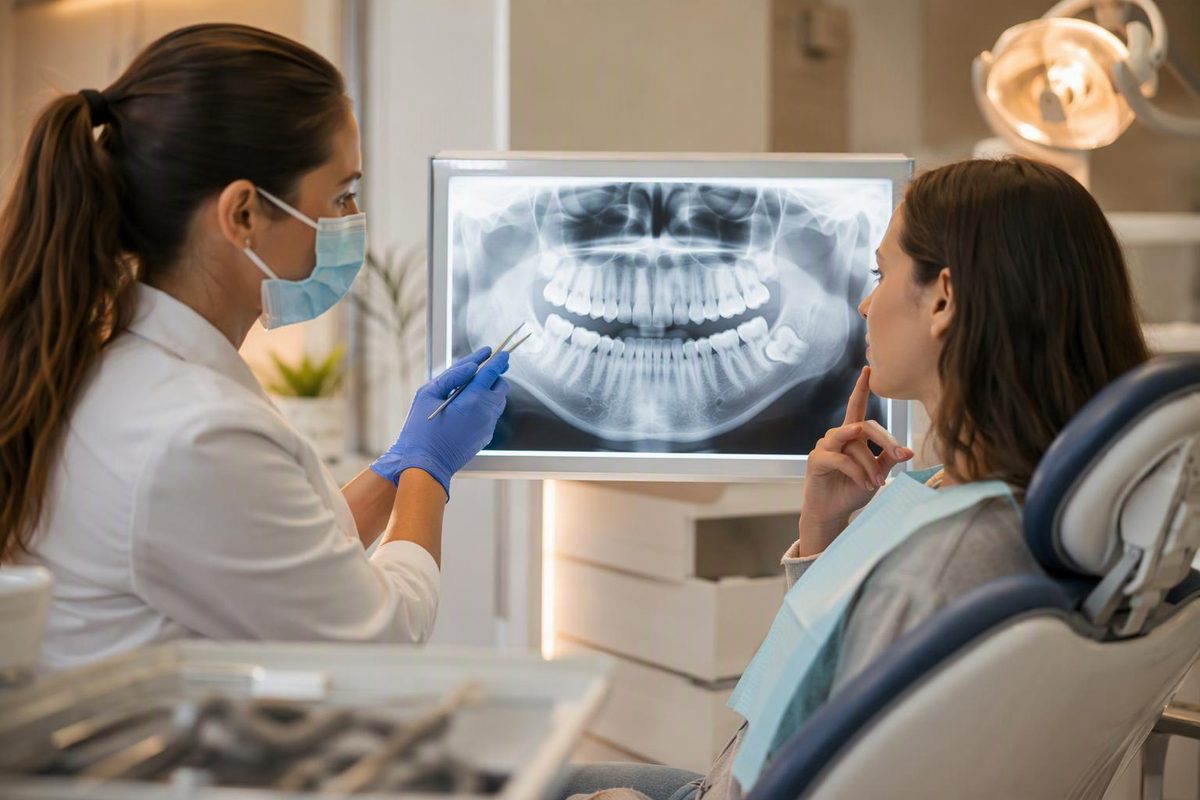
Wisdom teeth are usually the last adult teeth to grow in. Also called third molars, they sit at the very back of your mouth, behind your second molars. They typically come through the gums between ages 17 and 25, although not everyone has them. Here, “grow in” means erupt—become visible in the mouth—not begin forming. Cleveland Clinic
If you mean the last baby teeth, those are the second molars, which usually appear around age 2. Most children have all their baby teeth by ages 2–3. NHS baby-teeth guide
Which adult molars come in last?
The three sets of permanent molars generally appear in this order:
| Teeth | Typical time they come in |
|---|---|
| First molars | Ages 6–7 |
| Second molars | Ages 11–13, depending on the jaw |
| Third molars, or wisdom teeth | Late teens to mid-20s |
The American Dental Association’s eruption chart lists wisdom teeth at ages 17–21; Cleveland Clinic gives the broader range of 17–25. These are typical windows, not deadlines that every mouth must meet.
A new back tooth in an 11- or 12-year-old may therefore be a second molar, rather than a wisdom tooth. Your dentist can identify which tooth it is.
Why haven’t my wisdom teeth appeared?
Not seeing a wisdom tooth does not tell you whether it is absent or still below the gums. Some people do not have wisdom teeth. Others have teeth that remain trapped in the gums or jawbone, called impacted wisdom teeth. Cleveland Clinic
An impacted tooth may be partly visible or completely hidden. It can also cause no symptoms, so a lack of pain does not establish its position or health. A dental examination and, when needed, X-rays help assess the teeth. Mayo Clinic
If you are unsure what “missing” means in your case, see our explanation of why not everyone has wisdom teeth, then ask your dentist what your examination shows.
Does a wisdom tooth coming in mean it needs removal?
No—not simply because it is the last tooth to appear. Wisdom teeth that come through in a healthy position can help with chewing. Removal may be recommended for problems such as infection, decay that cannot reasonably be restored, gum disease or damage to neighboring teeth. Teeth that are kept still need regular cleaning and dental monitoring. American Dental Association
At your appointment, ask:
- Is the tooth fully through, partly through or impacted?
- Is there disease or damage to the tooth beside it?
- If we keep it, how should I clean it and how will you monitor it?
When to get it checked
Do not assume pain at the back of your mouth is just a tooth growing in. Contact your dentist promptly for pain, swollen or bleeding gums, jaw swelling, an unpleasant taste or difficulty opening your mouth. These can accompany an impacted tooth that has developed a problem. Mayo Clinic
If there are no symptoms and you simply cannot see your wisdom teeth, raise it at your next routine dental check-up rather than using age alone to decide whether something is wrong.